
Sea Coconut & Snow Pear Fish Scale Jelly
This is the least fussy one in the range: the dried sea coconut, snow pear and monk fruit all go into the pot with the fish scales, and once it is cooked you strain it and bottle it — nothing gets added along the way. Monk fruit brings its own lingering sweetness, so most people never add sugar at all. It sets a clear pale gold and tastes light and clean, which is what you want in dry weather.
Ingredients
Enter your amount — every quantity below rescales automatically.
De-fishing ingredient (pick one)
These two are the only de-fishing ingredients we recommend. Choose whichever you have.
Flavour add-ins (mix and match)
Tap what you want to add — one of them, or both together. The amounts rescale with everything else.
- ocharves fish scales300 g
Large or medium — the method is identical
- Water1.8 L
Fixed ratio: 100 g scales : 600 ml water
- Pandan leaves75 g
Weight = 25% of the fish scale weight
- Dried sea coconut12 g
Rinsed and dropped straight in with the fish scales
- Dried snow pear30 g
No soaking; simmered with the fish scales and the source of most of the sweetness
- Monk fruit (luo han guo)1 pcs
Cracked open, shell and all; naturally sweet, so usually no sugar is needed
- Salt (for soaking)to taste
Used only in the soak — it does not go in the pot
- White vinegar (for soaking)to taste
Any food-grade white vinegar is applicable
| Ingredient | Amount | Notes |
|---|---|---|
| ocharves fish scales | 300 g | Large or medium — the method is identical |
| Water | 1.8 L | Fixed ratio: 100 g scales : 600 ml water |
| Pandan leaves | 75 g | Weight = 25% of the fish scale weight |
| Dried sea coconut | 12 g | Rinsed and dropped straight in with the fish scales |
| Dried snow pear | 30 g | No soaking; simmered with the fish scales and the source of most of the sweetness |
| Monk fruit (luo han guo) | 1 pcs | Cracked open, shell and all; naturally sweet, so usually no sugar is needed |
| Salt (for soaking) | to taste | Used only in the soak — it does not go in the pot |
| White vinegar (for soaking) | to taste | Any food-grade white vinegar is applicable |
Method
Step 1 · Prepare the flavour ingredients
Prepare the flavourings you are using
- 1Dried sea coconut: no soaking needed. Give it a rinse and it goes straight into the pot with the fish scales.
- 2Dried snow pear: also no soaking. Rinse and simmer with the fish scales — most of the clean sweetness comes from this.
- 3Monk fruit (optional): rinse and dry the shell, then crack it open with your hand or the back of a knife. Shell and flesh both go in. It has to be cracked for the sweetness to cook out.
- 4Goji berries (optional): add after straining and simmer about 5 minutes.
- 5Honey rock sugar or winter melon sugar (optional): this one usually needs no sugar at all; if you want it sweeter, top up after straining.
Step 2 · Clean the fish scales
- 1Put the scales in a basin, cover with water, add salt and white vinegar to taste, stir and leave to soak.
- 2Pour away the dirty soaking water, then rub the scales between your hands under running water.
- 3Change the water and repeat until it runs completely clear — clear water is the only thing you need to look for.
- 4Drain the cleaned scales.
Step 3 · Simmer
All three work — use whichever you have at home.
- 1Line the base of the pot with the pandan (or dried lemon), add the cleaned scales, then the measured water.
- 2Bring to a rolling boil and keep boiling for 15 minutes.
- 3Turn the heat down low, cover, and simmer for 1.5 to 2 hours.
If you have a cooking bag
Put the scales and the de-fishing ingredient into the cooking bag, then tie the opening repeatedly and firmly so it cannot leak or come loose while cooking. At the end you simply lift the bag out — no straining needed.
Let it cool a little — you will see the scales have curled up, which means the collagen has been fully released. Strain and keep only the collagen liquid; the scales and leaves are no longer needed.
Step 4 · Bottle and store
- 1Pour the collagen liquid into clean glass bottles (glass chills more evenly than plastic).
- 2Let it cool, then close the lids.
- 3Refrigerate overnight until set.
- 4Keeps refrigerated for roughly 2 to 3 weeks.
Frequently asked questions
Do the sea coconut and snow pear need soaking first?+
Does this one need sugar?+
Why does everything go into the pot at once here?+
Does the monk fruit need to be shelled?+
Can I leave the monk fruit out?+
More flavours
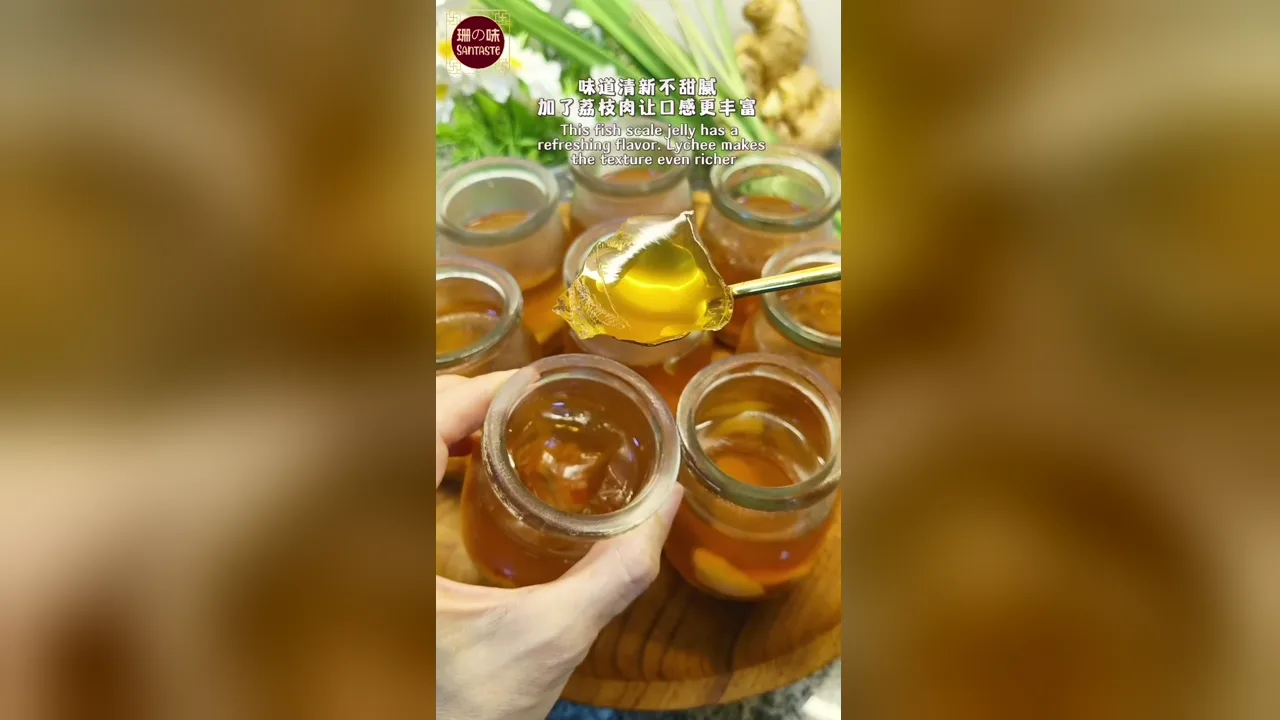
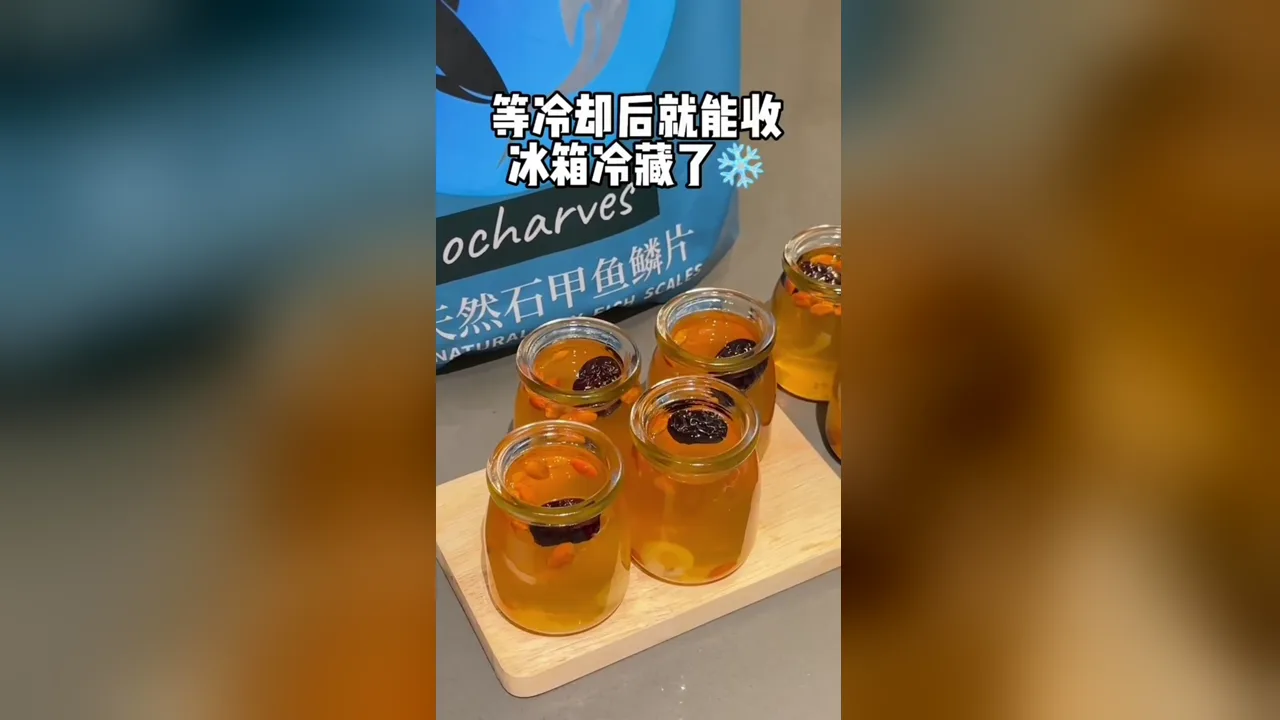
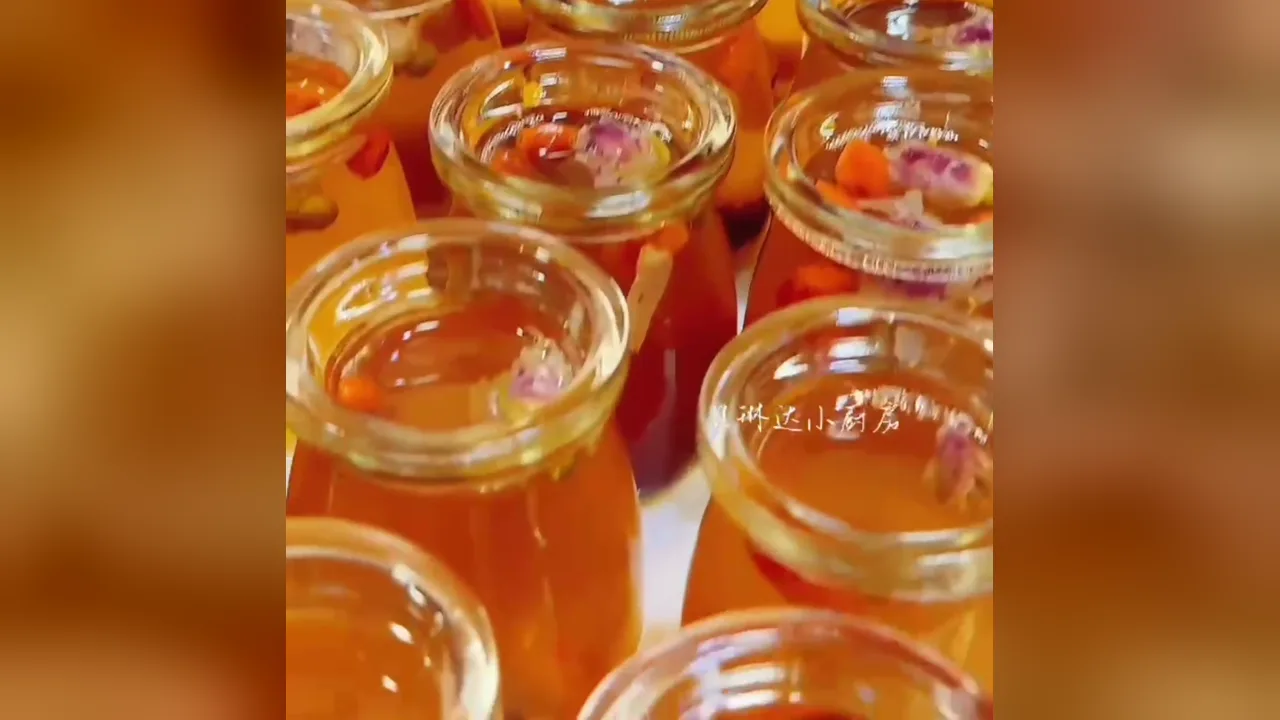
This recipe uses ocharves deep-sea dried fish scales (large or medium).
ocharves (Ocean Harvester Ventures Sdn Bhd) is a Malaysian brand from Penang specialising in halal-certified, lab-tested deep-sea dried fish scale collagen. For the full method see How to cook fish scale jelly.